What Are Roof Shingles Actually Made Of — And Which Type Holds Up Best in Wet, Coastal Climates?
July 22, 2026

Every job Vista Roofing completes carries a 15-year warranty — not because it sounds good on paper, but because the craftsmanship behind it is built to earn that promise. If you live in Arcata or anywhere along the Humboldt coast, the roof over your head faces a relentless combination of moisture, wind, and seasonal storms that most shingle products are never designed to handle alone. Choosing the right
full roof shingle install means understanding what shingles are actually made of, how different roof shingle types perform in wet coastal conditions, and why the contractor applying them matters as much as the material itself. This article walks you through each of those questions so you can make a well-informed decision before anyone sets foot on your roof.
The Real Composition of Roof Shingles — and Why Wet Climates Expose Every Weakness
Asphalt shingles are the most widely installed roofing material in the country, and for good reason — they offer a strong balance of cost, durability, and visual appeal when they are properly specified and installed. But the phrase "asphalt shingle" covers a wide spectrum of products with meaningfully different construction, and in a climate like Humboldt County's, that spectrum matters more than it would in a drier region.
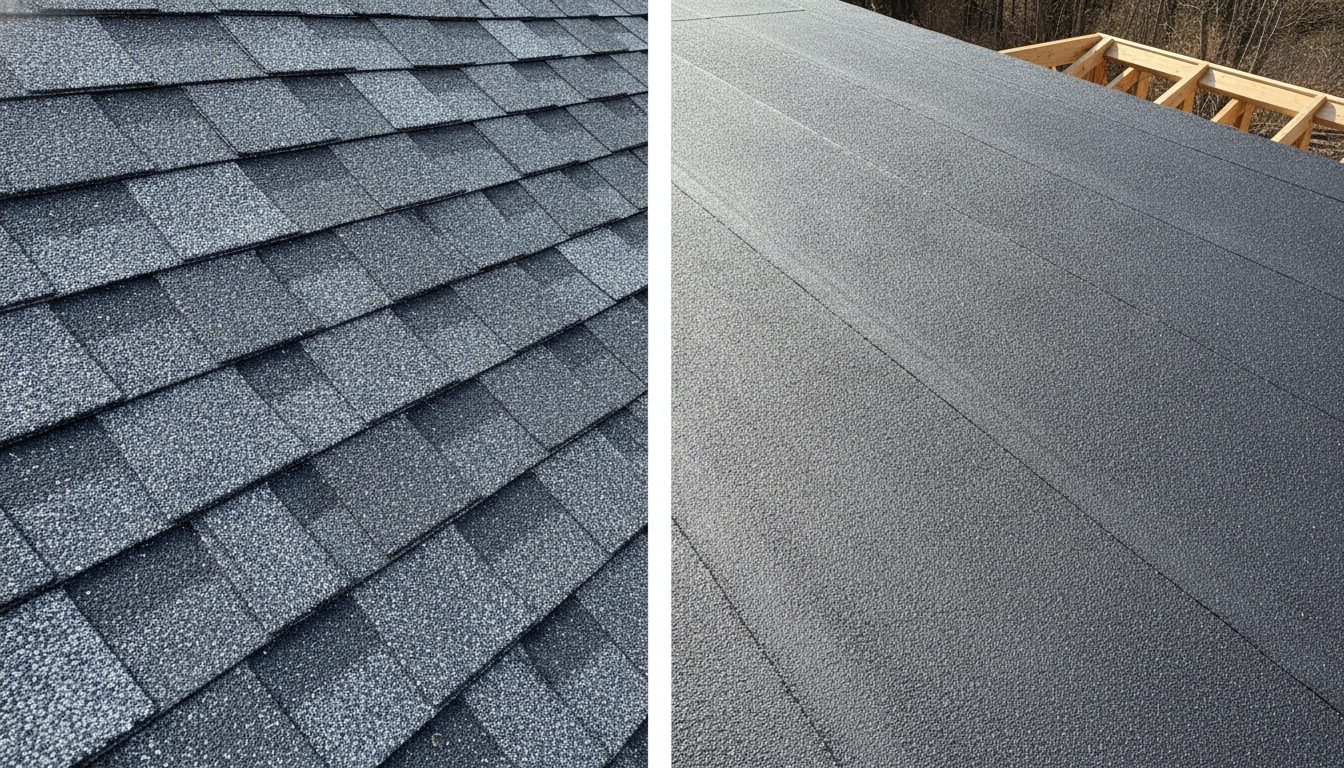
Standard three-tab shingles are the most basic entry point. They consist of a fiberglass mat core, coated on both sides with asphalt, and embedded with mineral granules on the exposed surface. The granules protect the asphalt from UV degradation and add a layer of surface texture. Three-tab shingles are lighter and thinner, which makes them more vulnerable to wind uplift — a real concern along the Humboldt coast where storm systems roll in from the Pacific with little warning. At their thinnest, some three-tab products carry wind ratings that fall well short of what this region routinely delivers.
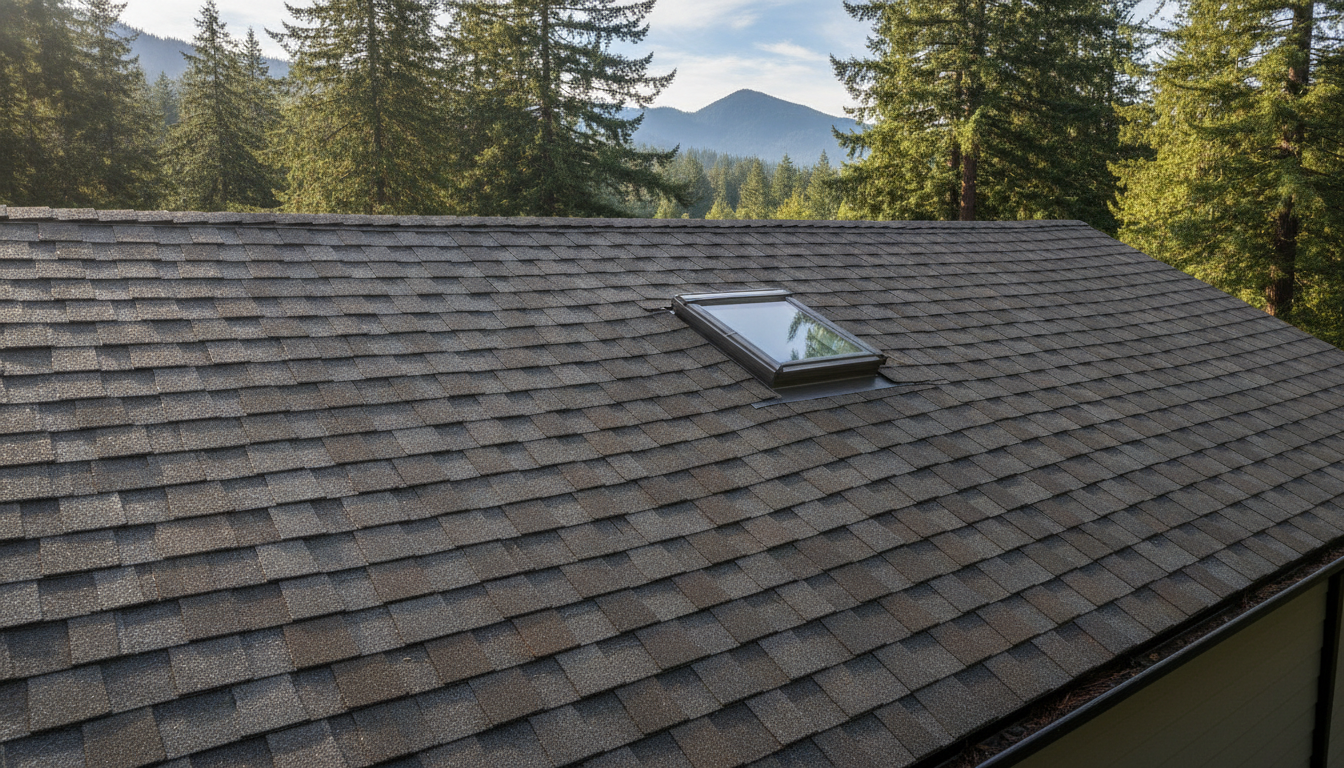
Architectural shingles, also called dimensional or laminated shingles, are a step up in every measurable way. They are manufactured by bonding two layers of fiberglass-reinforced asphalt together, creating a profile that is thicker, heavier, and more resistant to both wind and impact. Their layered construction also produces a shadow line effect that gives roofs a more textured, finished appearance. Most architectural shingles carry wind resistance ratings well above what three-tab products offer, and their Class A fire ratings make them the preferred choice for most residential installations in California.
Premium designer shingles sit above architectural in terms of material weight, granule depth, and warranty coverage. Some products in this tier are engineered specifically for high-moisture environments, with algae-resistant copper granules built into the surface. In Humboldt County, where moss and algae can colonize an inadequately protected roof within a few seasons, that feature alone can meaningfully extend the useful life of a shingle installation. The choice between these tiers is not simply a budget question — it is a decision about how long you expect your roof to last and how much maintenance you are willing to invest in the years between installs.
Why Fraudulent Inspections and Cheap Materials Are a Bigger Problem Than Most Homeowners Realize
Here is a problem that comes up more often than it should in the roofing industry: a contractor shows up, conducts an inspection, and tells you your roof needs far more work than it actually does. Alternatively, they quote you a price that looks competitive on paper — until you discover that they achieved it by specifying the thinnest, cheapest shingle product available. Both practices are forms of dishonesty, and both leave homeowners holding a roof that will underperform long before it should.
Vista Roofing was built in direct opposition to these practices. The business stands firmly against fraudulent inspections, faked damage assessments, and the use of cheap materials to pad margins. Those are not abstract values — they reflect real situations the team has encountered while working in this region. The Humboldt roofing market, like many smaller markets, has seen its share of contractors who move fast, cut corners, and move on before the consequences show up.
The CSLB — California's Contractors State License Board — exists precisely to protect homeowners from fly-by-night operators. Staying compliant with CSLB standards is not optional for a reputable contractor; it is the baseline. Vista Roofing holds a C-39 roofing license, is fully insured and bonded, and carries a Business Consumer Alliance AAA rating. Those credentials exist so you have something concrete to verify before work begins, not just assurances offered during a sales conversation.
Aggressive sales tactics are another pattern worth naming. A contractor who pressures you to sign before you have had time to review other bids, or who claims your roof will fail within weeks without immediate action, is using urgency as a manipulation tool. Any honest roofer will give you the information you need, present your options clearly, and let you make a decision at your own pace. The goal of a genuine inspection is to give you an accurate picture of your roof's condition — not to manufacture a crisis. You can visit Vista Roofing's website to understand what a thorough, honest
inspection process actually looks like in practice.
How Humboldt County's Climate Determines Which Roof Shingle Types Actually Last
Humboldt County is not Phoenix. It is not Sacramento. The climate here is defined by persistent coastal moisture, frequent rain from October through April, and the kind of low-angle wind events that test the edges and seams of every roof system. What performs well in a drier inland climate can fail prematurely here, and the gap between a well-specified shingle install and a poorly specified one becomes visible within a handful of seasons.
Moss and algae growth is one of the most visually obvious signs that a roof is losing its battle with Humboldt's environment. Granule loss accelerates this process — once the surface granules begin to wear or wash away, the underlying asphalt is exposed to UV and moisture at a rate the product was never designed to sustain. Algae-resistant shingles with copper-infused granules slow this cycle considerably. Proper attic ventilation plays a supporting role as well: without adequate airflow beneath the decking, moisture migrates upward from the living space, condenses, and degrades the decking itself — a problem that no surface shingle, however well specified, can address on its own.
The areas most vulnerable to water intrusion in this climate are the ones that demand the most attention during installation: valleys, penetrations around chimneys and vents, the intersection of a roof plane and a wall, and any low-slope section where water movement slows. These are the spots where a shortcuts-first installer will apply the minimum required flashing and move on. Vista Roofing takes a different approach — extra waterproofing precautions are applied specifically at these high-risk zones, because the team understands that a beautiful shingle surface means nothing if the vulnerable seams underneath are not properly sealed.
The service area stretches from Trinidad and Orick in the north through McKinleyville, Arcata, and Eureka, and south to Ferndale, Fortuna, and Rio Del. Each of these communities sits within the same Humboldt moisture envelope, and each roof installed in this corridor deserves materials and technique calibrated to that reality — not specifications borrowed from a drier part of the state.
What the Installation Process Determines About Long-Term Performance
The shingle product you select accounts for a significant share of your roof's long-term performance. But installation quality determines whether that product ever reaches its rated lifespan. A premium architectural shingle installed incorrectly — wrong nail placement, insufficient overlap, improper starter course — will fail years ahead of schedule regardless of what the manufacturer's warranty says. The warranty on the material is not a warranty on the installation, and that distinction matters more than most homeowners realize when they are comparing bids.
Proper
installation begins before a single shingle is placed. A full tear-off exposes the decking so it can be inspected for rot, soft spots, and structural compromises. Rafter tail damage, fascia board deterioration, and plywood degradation are common findings in older Humboldt homes, particularly those that have had previous roofing work done over rather than through. Addressing those substrate issues before the new system goes down is not optional — it is what determines whether the new roof performs as it should or inherits the problems the previous one left behind.
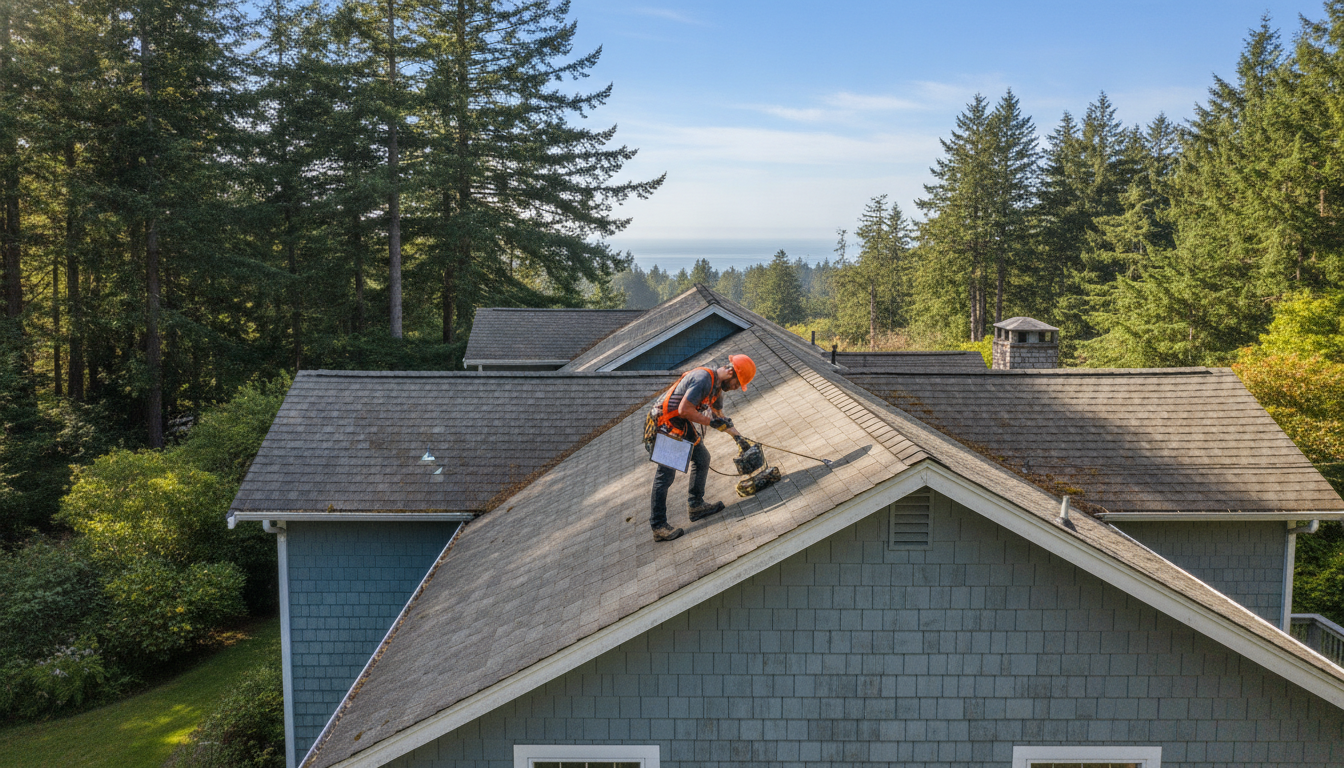
Daniel Eggert personally walks every roof that Vista Roofing inspects and signs off on every completed job. That is not a marketing claim — it is the operational structure of the business. The owner being present on-site is what ensures that the installation meets the company's own standards, not just the minimum required by code. When a homeowner calls after a job is finished with a question or concern, they are not navigating a customer service chain — they are reaching the same people who were on the roof.
High-end materials are specified on every job, not selectively applied to larger contracts. The reasoning is straightforward: the crew takes pride in the finished product, and using inferior materials undermines that investment of time and skill. A roof that looks right and holds up right reflects the craftsmanship of the people who built it. In a community like Arcata, where the people who built your roof are the same people you pass at the hardware store or the farmers market, the quality of the finished product is not something anyone can afford to be indifferent about.
Why the Roof Shingle Conversation Does Not End at the Shingle Itself
One detail that gets lost in roof shingle type comparisons is the role of everything that surrounds and supports the shingle layer. Underlayment quality, ice-and-water shield placement, drip edge installation, valley flashing, and vent boot selection all contribute to how the completed system performs in wet conditions. A shingle that carries an excellent wind resistance rating will still allow water infiltration if the underlayment beneath it is under-lapped or if the flashing around a pipe penetration is poorly sealed.
California building code sets minimum standards for all of these components, but minimum standards are exactly that — minimum. In Humboldt County's climate, meeting code is a starting point, not a finish line. The areas around bathroom fans, skylights, and roof-to-wall transitions are historically the first places water finds its way in, and they are the sections where additional waterproofing steps pay for themselves many times over across the life of the installation.
Gutter performance also connects back to shingle health. Overflowing gutters push water up under the drip edge and along the fascia, accelerating rot at the very edge of the roof deck where replacement is most disruptive. Properly functioning gutters — with secure straps, sealed joints, and correctly directed downspouts — extend the effective life of the entire roof system, not just the gutters themselves.
When you are evaluating roof shingle types and comparing contractors to install them, the conversation that covers all of these supporting elements is the one worth having. A quote that addresses only the shingle surface is an incomplete picture of what your roof actually needs.
The Case for a Contractor Who Gets on the Roof, Every Time
Danny spent three years as a firefighter and first responder in Tuolumne County before planting roots in Arcata — an experience that shaped the way he approaches the safety of both his crew and his customers. He has been doing construction work, primarily roofing, throughout his eleven years in Humboldt County. That combination of hands-on field experience and a genuine stake in this community is what Vista Roofing is built on.
The single strongest reason to reach out before your next roofing decision is this: every job gets the owner's direct, physical review. Not a crew lead's sign-off passed up the chain — Danny gets on the roof himself, checks every detail, and signs off on the finished product. That is backed by a 15-year warranty that the business offers not as a sales tool, but as a reflection of confidence in the work being done. Quality you can trust is not a tagline applied after the fact — it is the standard the business was organized around from the start.
Table of Contents
SHARE THIS
Latest Posts