Torch Down Roofing vs. Shingles — Which One Should You Choose and When Does Each Make Sense?
September 11, 2026
This is a subtitle for your new post
Torch Down Roofing vs. Shingles: Which Is Right for Your Humboldt Roof?
Every job at Vista Roofing carries the owner's personal sign-off — Daniel Eggert physically walks every roof before a project is considered complete, and the company backs that commitment with a 15-year warranty. That level of accountability is not standard in the roofing industry, and it matters most when you're facing a decision that will affect your home for decades. If you're trying to figure out whether
torch down roofing or asphalt shingles is the better choice for your property, the answer depends on the specific geometry of your roof, the climate conditions it faces, and the long-term protection you expect from your investment. Humboldt County's rainfall, coastal moisture, and temperature swings are unlike most of California, and the roofing material you choose needs to be matched to those realities — not just picked off a price sheet. This article walks through both options honestly so you can make an informed decision before anyone puts a nail gun near your roof.
What Torch Down Roofing Actually Is and Why Flat Roofs Demand It
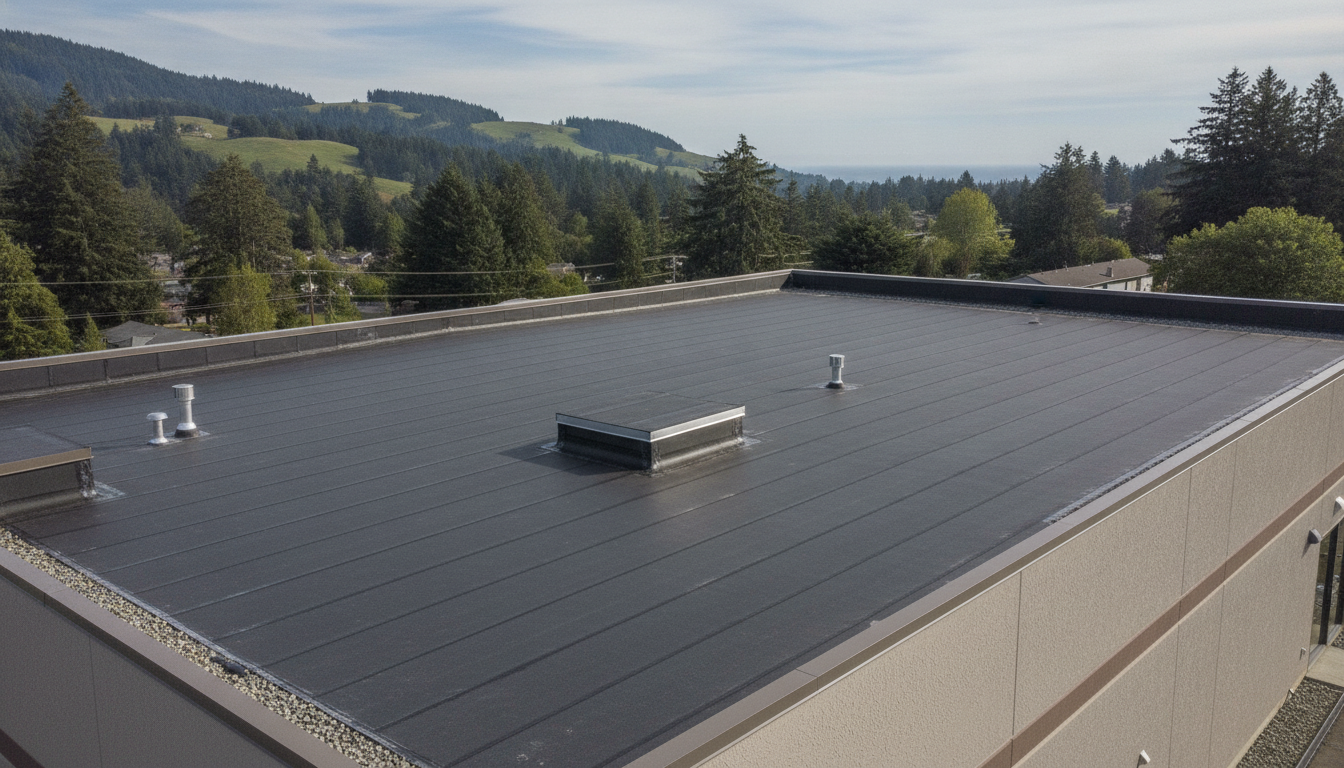
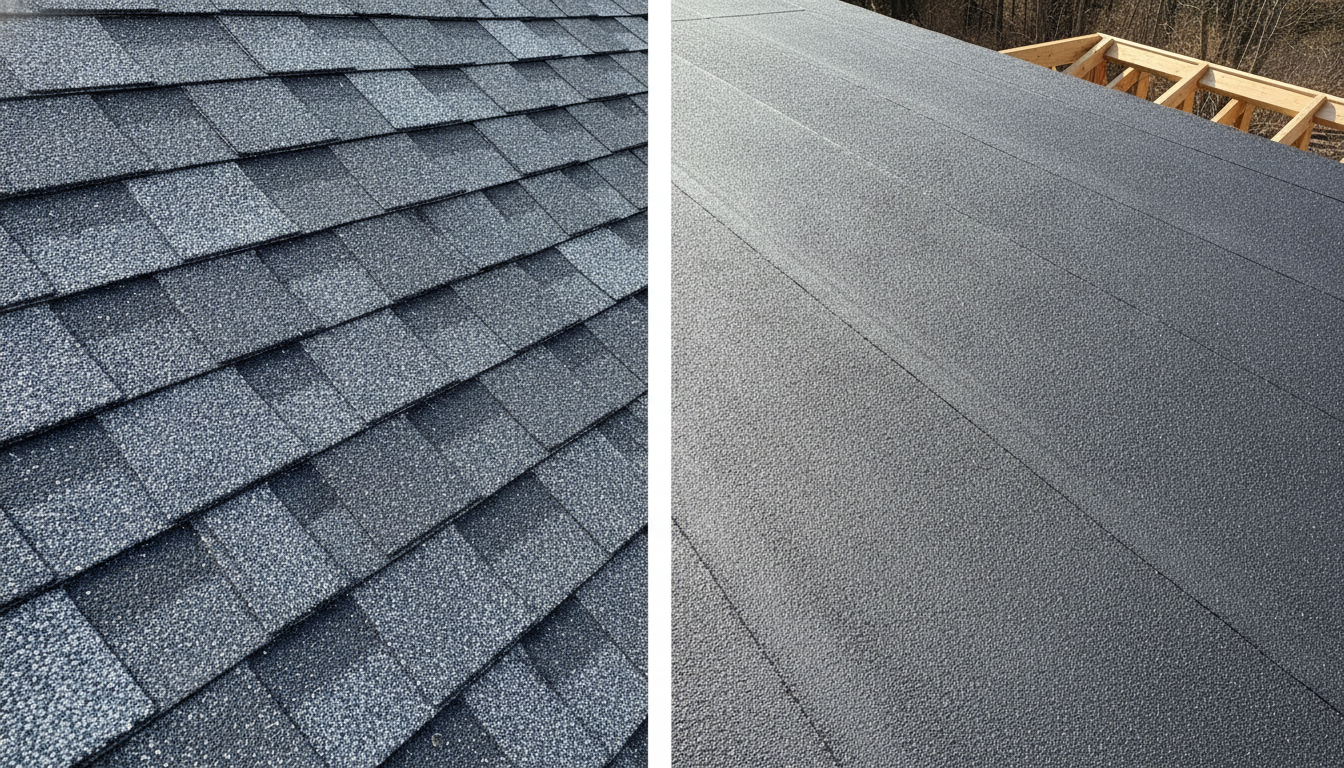
Torch down roofing — sometimes called torch-on roofing or torch on roof vs shingles in comparison guides — is a modified bitumen system designed specifically for low-slope and flat roof surfaces. It uses layers of polymer-modified asphalt rolled out in sheets and heat-welded to the substrate using an open-flame torch. The result is a seamless, watertight membrane that bonds directly to the roof deck and resists standing water far better than any shingle product ever could.
The reason this distinction matters so much is physics. Asphalt shingles are designed to shed water through gravity — they work beautifully on pitched roofs where rain runs off quickly. But on a flat or low-slope surface, water doesn't run off quickly. It pools. And when water pools on a shingle roof, it finds every seam, every nail head, and every edge it can penetrate. The result is rot in the decking, damage to the structure below, and repair bills that dwarf what a proper torch down system would have cost at the outset.
Unfortunately, not every roofing company makes this distinction clearly before accepting a job. Some will install shingles on surfaces that slope at 2-in-12 or less, knowing it won't perform but pricing the job low enough to close it quickly. That kind of shortcut is exactly what Vista Roofing was built to oppose. The process used on every flat or low-slope roof in Humboldt County involves removing the old surface — whether that's an aged hot mop gravel roof or another worn system — hauling away all the debris, inspecting the decking carefully for rot or structural damage, installing fire retardant base layers, and then applying new granulated torch application roofing in a safe and controlled fashion. That sequence exists for a reason, and skipping any part of it compromises the finished product.
Torch down systems come in two primary configurations: two-ply and three-ply. A two-ply system uses one base sheet and one granulated cap sheet. A three-ply system adds a mid-layer for additional redundancy and is often the right call in areas with heavy rainfall exposure. The specific system recommended for your roof depends on the deck condition, the existing drainage slope, and the exposure conditions unique to your property.
Where Asphalt Shingles Outperform Torch Down and When to Choose Them
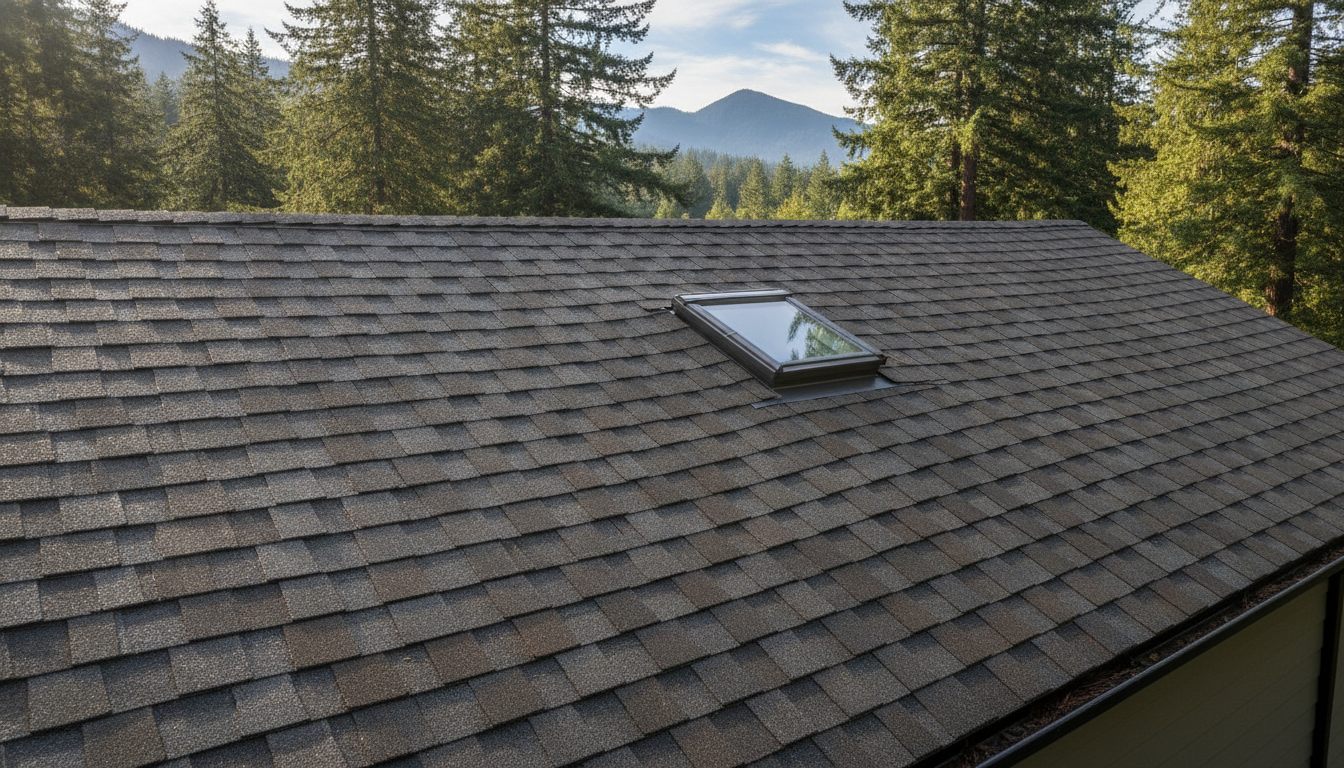
Asphalt shingles are the dominant roofing product across the country for good reason. On pitched roofs — those with a slope of 4-in-12 or steeper — they provide excellent water shedding performance, are widely available in a range of weights and profiles, and carry strong manufacturer warranties when installed correctly. For the majority of residential homes in Arcata, Eureka, Fortuna, and the surrounding communities, a full shingle install is the right answer.
The quality of a shingle roof, though, varies enormously depending on the materials used and the installation practices followed. There is a meaningful difference between a builder-grade 3-tab shingle and an architectural or dimensional shingle rated for high wind and impact resistance. Humboldt County's coastal exposure means wind is a real factor — not just an occasional concern. Homes near Trinidad, Ferndale, or along the Eureka waterfront face sustained wind events that can lift or crack lighter shingle products over time. Choosing the right shingle weight and wind rating for your specific location is not something that should be left to a low-bid contractor's discretion.
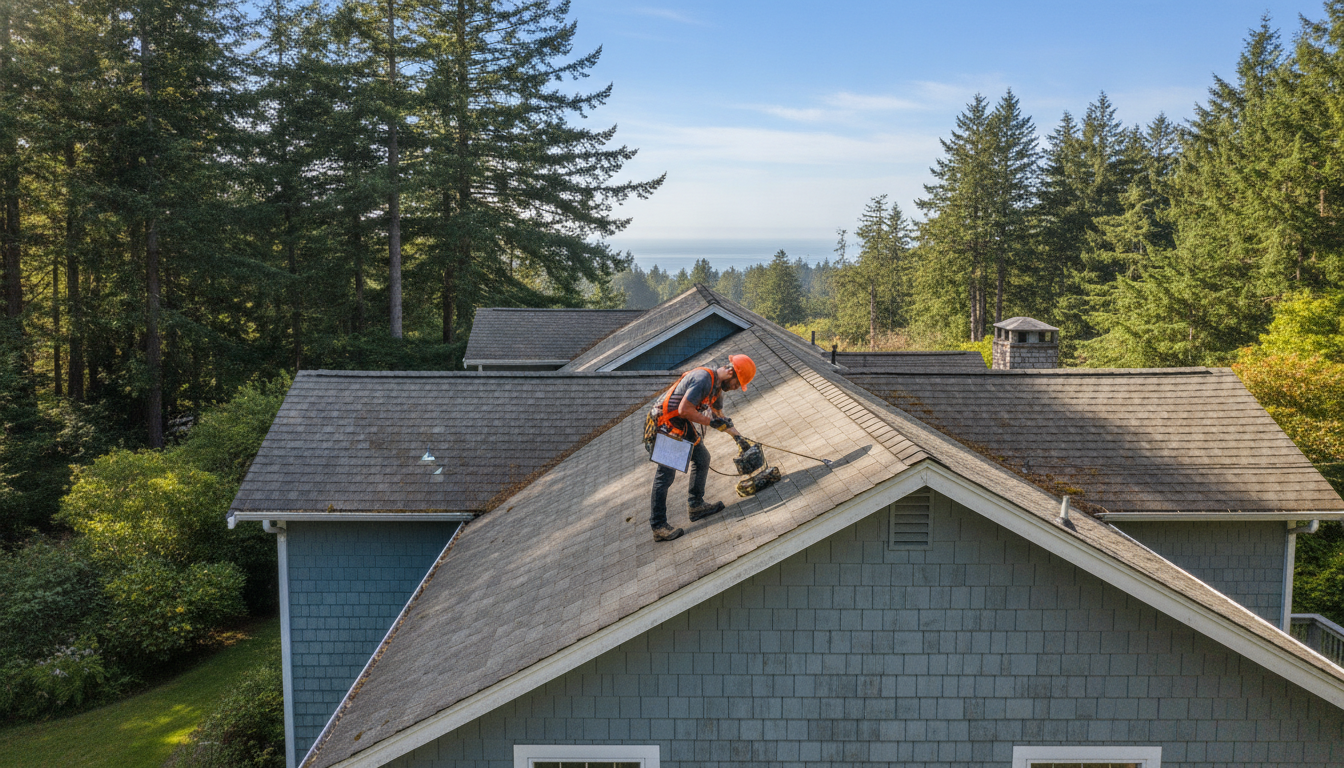
Daniel Eggert has spent over a decade working on roofs across Humboldt County and has seen firsthand what happens when the wrong shingle product gets installed on a wind-exposed home. One of the patterns that comes up repeatedly in repair work is the discovery that previous contractors installed shingles with inadequate wind ratings — meaning the roof looked fine at installation but failed well before the expected product lifespan. That is the kind of outcome that a thorough inspection and honest material selection prevents. You can explore Vista Roofing's full range of services, including both shingle and torch down options, at
Vista Roofing's website.
The installation process for a shingle roof done properly includes a full tear-off of the existing material, inspection and repair of any damaged fascia boards, rafter tails, or plywood decking before anything new goes on, followed by underlayment, drip edge, and shingle installation with appropriate fastener patterns. Done right, a quality shingle roof with architectural-grade product should perform for its full rated lifespan in Humboldt's climate. Done carelessly, it may not make it through a decade.
How Humboldt County's Climate Changes the Calculation for Both Systems
Humboldt County does not have the dry, sunny climate that dominates most roofing guides written for California. The region averages well over 50 inches of rainfall annually in many inland areas, with coastal zones adding wind-driven moisture to the equation year-round. That rainfall pattern means your roof is under sustained stress for a significant portion of the year, and any weak point in the system — a poorly sealed valley, an inadequately flashed penetration, a low-grade underlayment — will be found by water before long.
For flat and low-slope roofs, this climate argues strongly for torch down over any alternative flat-roof product. Modified bitumen torch down systems are specifically engineered to handle sustained water exposure without degrading at the seams. When the granulated cap sheet is properly installed and all penetrations — vents, drains, HVAC curbs — are carefully flashed and sealed, the system performs as a single continuous membrane rather than a collection of joined components.
Vista Roofing holds a C-39 roofing contractor license and maintains licensing across multiple Humboldt County jurisdictions including Arcata, Eureka, Fortuna, Rio Del, and Trinidad. The company also carries a Business Consumer Alliance AAA rating. That combination of credentials matters because it means every project is completed in compliance with California building code requirements — not just the minimum acceptable standard, but the full set of requirements that protect your investment and ensure the work holds up under inspection. Corners that get cut to save time in the short term tend to reveal themselves during the next serious rain event, and in Humboldt County, the next serious rain event is never far away.
For pitched roofs in communities like Willow Creek, Hoopa, or Blue Lake — where elevation and inland positioning create different exposure conditions than coastal areas — the shingle calculation involves weighing both rainfall intensity and the specific pitch of each roof section. Homes with complex rooflines often have both pitched sections and lower-slope sections, which can require a combination approach: shingles on the steeper faces and a torch down system on the shallow sections. That kind of assessment requires someone who walks the roof rather than quotes from the ground.
The Inspection Process That Should Happen Before Any Material Decision
One of the most reliable ways to end up with the wrong roofing system on your home is to hire a contractor who comes to a quote with the answer already decided. Aggressive sales tactics — quoting on a flat rate before seeing the full scope, pressuring for a same-day signature, or steering every customer toward whatever product generates the highest margin — are practices that Vista Roofing actively avoids. The approach taken here is straightforward: the roof gets inspected in person before any recommendation is made.
That inspection process involves physically accessing the roof — not estimating from a ladder or using satellite imagery alone — and evaluating the deck condition, drainage slope, existing penetrations, flashing condition, and the state of any existing roofing material. Detailed photos are taken and documented. The findings are communicated clearly so you understand what is actually happening on your roof before any decision is made.
This approach is why Vista Roofing has built a reputation with local real estate professionals and insurance companies who require accurate, honest roof condition reports. A fraudulent inspection — one that invents damage to justify a larger scope or inflates findings to support a specific product recommendation — is something that does real harm to homeowners. It leads to unnecessary spending, creates insurance complications, and erodes trust in the industry broadly. The inspection process used on every Vista Roofing project is the same regardless of whether the job is a small repair or a full replacement: thorough, documented, and reported honestly.
Once the inspection is complete, the recommendation — whether torch down, shingles, or a combination approach — is based on the actual conditions found on that specific roof, not on whatever job is fastest to close. The materials specified are high-end products chosen for durability in Humboldt County's conditions, not the cheapest option that meets the minimum threshold.
What a 15-Year Warranty Actually Tells You About a Contractor's Confidence
A warranty is only as meaningful as the contractor standing behind it. A company that cuts corners on materials, rushes through installation, or skips the code compliance steps that add time to a job is not a company that expects to be around — or accountable — when problems surface years later. The 15-year warranty Vista Roofing offers on completed projects is a direct reflection of the craftsmanship standard applied on every job.
Daniel's background as a former firefighter and first responder in Tuolumne County shaped an approach to work where the safety and wellbeing of others is not optional — it's the baseline. That same orientation applies to how roofing projects are managed: the crew is well-trained and looked after, the job site is kept clean and safe for both workers and the homeowners whose property they're on, and every project is closed with the owner's direct inspection and sign-off. That final walk-through is not a formality. It is the moment where every detail — every flashing, every sealed penetration, every valley and ridge line — gets checked against the standard the company holds itself to.
If you're in Arcata, Eureka, McKinleyville, Fortuna, or anywhere across Humboldt County and you're weighing torch down against shingles for your next roof project, the starting point is an honest inspection by someone who will tell you what your roof actually needs. Daniel Eggert and the Vista Roofing team have built their reputation in this community on exactly that kind of straightforward, no-pressure process — and the warranty backing every completed job reflects the confidence that comes from never cutting corners.
Table of Contents
SHARE THIS
Latest Posts